
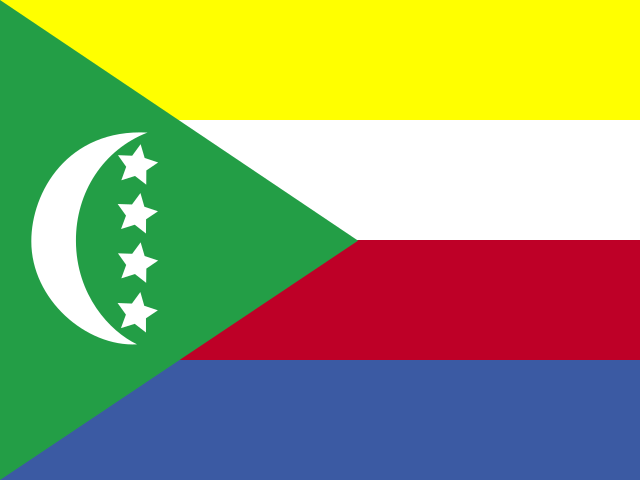
 Comoros
Why the Comoros
The Comoros archipelago lies between Mozambique and Madagascar. Three islands make up the independent country: Grande Comore (Ngazidja), Mohéli (Mwali) and Anjouan (Ndzuwani). The fourth, Mayotte, is administered by France, and the Comoros claims it; the status is disputed. The culture blends African, Arab, Malagasy and French influences, and Islam is the main religion.
Grande Comore
Moroni, the capital, has an old medina and the Old Friday Mosque beside the harbour. Mount Karthala, an active shield volcano of about 2,360 metres, dominates the island, with a large summit caldera, and can be climbed with a guide when conditions permit. The Itsandra and Mitsamiouli beaches have white sand and clear water.
Mohéli and Anjouan
Mohéli is the smallest and most peaceful island and is home to Mohéli Marine Park, where green turtles nest and humpback whales visit between roughly July and October. Anjouan, a steep, green island, has a fortress-town at Mutsamudu and plantations of ylang-ylang, vanilla and cloves. The Comoros are among the world’s leading producers of ylang-ylang, a perfume ingredient.
When to go and getting there
The drier season from May to October is the most comfortable. Prince Said Ibrahim International Airport near Moroni has regional flights; inter-island services and boats can be irregular, so build slack into plans. Facilities are modest and card payment is limited.
Travelling responsibly
Dress modestly, respect Muslim customs during Ramadan and prayer times, and follow guide advice on the sea, where currents can be strong. Keep distance from nesting turtles and whales.
Before you go
Check your government’s travel advice, as political tensions and reduced services can affect inter-island travel. Entry rules, visas and health requirements (including yellow fever vaccination certificates, which many African countries ask for) depend on your nationality and change, so confirm them with the official government sources, your own government’s travel advice and your insurer. African Travel Chronicles gives general information and not personal travel advice.
Official sources
- Comoros tourism authority (Ministry of Tourism)
- UNESCO MAB: Mohéli Biosphere Reserve
- UNESCO World Heritage Centre: States Parties
- CIA World Factbook