
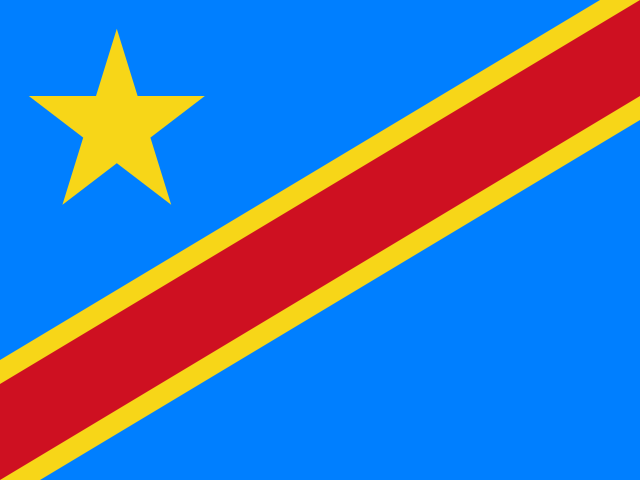
 Democratic Republic of the Congo
Why the DRC
The Democratic Republic of the Congo is the second-largest country in Africa and one of the most biologically rich. It has the Congo River, volcanoes, savanna and a very large rainforest, and its music, from rumba to soukous, has influenced the whole continent. At the same time, armed conflict continues in the east, and most governments advise against travel to large parts of the country.
Virunga and the east
Virunga National Park, Africa’s oldest national park, has mountain gorillas, the active volcano Nyiragongo with its lava lake, and Nyamuragira. The park has been affected by conflict, and visits have been suspended at times. Kahuzi-Biega protects eastern lowland (Grauer’s) gorillas near Bukavu.
The Congo basin
Salonga National Park, the largest tropical rainforest reserve in Africa, protects bonobos, which live only in the DRC. Lola ya Bonobo sanctuary near Kinshasa shelters orphaned bonobos. The Okapi Wildlife Reserve in the Ituri forest protects the okapi.
Kinshasa
Kinshasa, on the Congo River opposite Brazzaville, is one of Africa’s largest cities, and is famed for its music scene, painters and fashion. The National Museum and Académie des Beaux-Arts show art traditions.
Practical notes
Roads are limited and air travel is the main way to cover long distances. Visas, permits and yellow fever vaccination are usual requirements. Always check conditions with official sources and a trusted operator.
Travelling responsibly
Support rangers and conservation organisations, follow gorilla and wildlife rules and be careful to avoid purchases involving bushmeat or minerals from conflict areas.
Before you go
Most governments advise against travel to eastern provinces and several other regions. Read current advice and confirm park openings directly with park authorities. Entry rules, visas and health requirements (including yellow fever vaccination certificates, which many African countries ask for) depend on your nationality and change, so confirm them with the official government sources, your own government’s travel advice and your insurer. African Travel Chronicles gives general information and not personal travel advice.
Official sources
- Congolese Institute for Nature Conservation (ICCN)
- Virunga National Park official site
- UNESCO World Heritage Centre: Democratic Republic of the Congo
- UNESCO World Heritage Centre: States Parties
- CIA World Factbook