
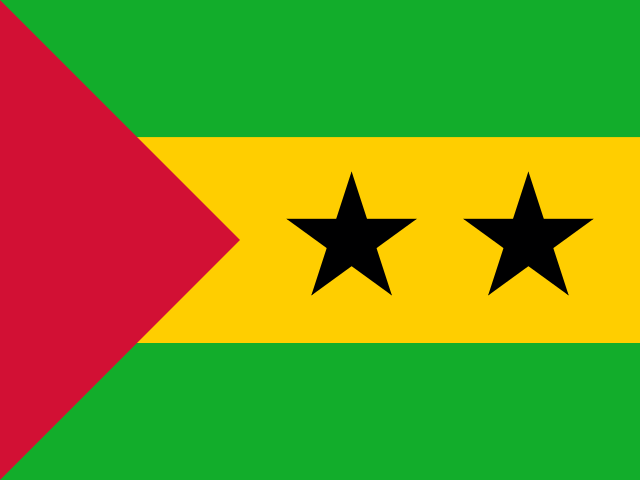
 São Tomé and Príncipe
Why São Tomé and Príncipe
This island nation in the Gulf of Guinea is Africa’s second-smallest country by area after Seychelles. The islands were uninhabited until Portuguese settlers arrived in the 1470s, and today’s society blends Creole languages and traditions, with a slow pace and a strong focus on cocoa, coffee and conservation.
São Tomé
The capital has a Portuguese-era cathedral and fort. Outside the city, the old plantation estates, the roças, such as Roça Agostinho Neto and Roça Monte Café, tell the story of cocoa and forced labour. Pico Cão Grande, a volcanic needle rising about 370 metres from the forest, is among the island’s signature sights. Ôbo Natural Park protects rainforest with endemic birds. Praia Jalé and Praia Inhame are known for turtle nesting from around October to February.
Príncipe
Príncipe, the smaller island, was designated a UNESCO Biosphere Reserve in 2012 and has forested peaks, beaches and a small lodge economy, notably the Sundy plantation, where Arthur Eddington’s 1919 eclipse expedition made observations that supported Einstein’s theory of general relativity.
When to go and getting there
The dry season, known as the gravana, from June to September, is best. São Tomé International Airport receives flights from Lisbon and regional hubs. Inter-island flights and boats link São Tomé and Príncipe. Facilities are modest.
Travelling responsibly
Respect turtle-nesting rules, choose plantation stays that benefit local workers, and buy cocoa and coffee directly from producers.
Before you go
Check your government’s advice on health, including malaria precautions. Entry rules, visas and health requirements (including yellow fever vaccination certificates, which many African countries ask for) depend on your nationality and change, so confirm them with the official government sources, your own government’s travel advice and your insurer. African Travel Chronicles gives general information and not personal travel advice.
Official sources
- São Tomé and Príncipe Directorate of Tourism
- UNESCO MAB: Príncipe Biosphere Reserve
- UNESCO World Heritage Centre: States Parties
- CIA World Factbook